

Absolutely. E-bikes travel faster and often cover longer distances, so good lighting is essential for both seeing the road ahead and making sure you’re seen by others. Quality lights dramatically improve safety in low-light or busy traffic conditions.
Lights for Electric Bikes

Lights on bicycles maximise safety for riders. They ensure better visibility in low-light conditions, significantly reducing accidents.
Lighting plays an especially important role on electric bikes, where higher speeds and longer rides make visibility even more crucial on eBikes. A strong front light helps you pick out road surfaces and obstacles well ahead, while a dependable rear light makes sure other road users spot you quickly. Most e-bike lights now use high-efficiency LEDs, giving you a bright, clear beam without putting unnecessary strain on your battery system. For early-morning commutes or evening rides, good lighting is a must-have for both safety and confidence.
Modern e-bike lighting systems come with a variety of modes to suit different environments. A steady, powerful beam works brilliantly on unlit country lanes, whereas flashing or pulsing modes help you stand out in traffic-heavy urban areas. Some premium models even adapt automatically to surrounding light levels, giving you extra brightness only when you need it. It’s all designed to help you ride safely while making the most of your battery life.
One of the biggest advantages for e-bike owners is the choice of power options. While USB-rechargeable lights are still popular, many riders prefer integrated lights that run directly off the e-bike’s main battery. It keeps your cockpit tidy, removes the faff of separate charging, and ensures your lights are ready every time you switch on the bike. For riders who frequently commute or travel at night, it’s a simple upgrade that pays off every day.
Mounting setups on electric bikes are also becoming more streamlined. Traditional handlebar or seatpost mounts remain common, but many e-bikes now come with rack mounts or even fully integrated lighting built into the frame. These setups not only look sleek but also provide excellent alignment and visibility. Whether you’re riding for leisure, commuting, or tackling longer weekend routes, a well-chosen lighting system helps you get the most from your electric bike in any conditions.
Yes. Many e-bike lights are designed to plug directly into the bike’s main battery system. This means no separate charging, a tidier setup, and lights that automatically switch on with the bike.
Not at all. Modern LED lights are extremely efficient, drawing very little power. The impact on your overall range is usually negligible.
USB lights are standalone units you recharge separately—great for flexibility. Integrated lights draw power from the e-bike itself, making them more convenient for daily commuting and ensuring you always have lighting when you ride.
For road riding, a front light of around 300–600 lumens is usually enough. For unlit lanes or off-road routes, many riders prefer 700+ lumens. Rear lights don’t need high lumens—visibility and a good beam pattern matter more.
Both have their place. A steady beam is best for lighting your path, especially on dark roads. Flashing modes are fantastic for daytime visibility and getting noticed in traffic.
Most USB-rechargeable lights simply strap on and take minutes to fit. Integrated lights are usually straightforward too but may require wiring into the bike’s system—something many riders prefer to have done professionally.
Yes, most reputable e-bike lights come with solid weatherproof ratings. They’re designed to handle UK rain, puddles, and general year-round riding without issue.
Using bike lights in flashing mode enhances visibility but may affect depth perception. It grabs attention but can be distracting for some. Consider traffic conditions and opt for steady mode when riding in well-lit areas or in groups, reserving flashing mode for low-light or high-traffic situations.
Front lights are usually fitted to the handlebars or the fork crown, depending on your setup. Rear lights often go on the seatpost, rear rack, or built-in frame mount if your e-bike supports it. Integrated solutions tend to look cleaner and stay better aligned.
Take a peek at our latest ebike arrivals..
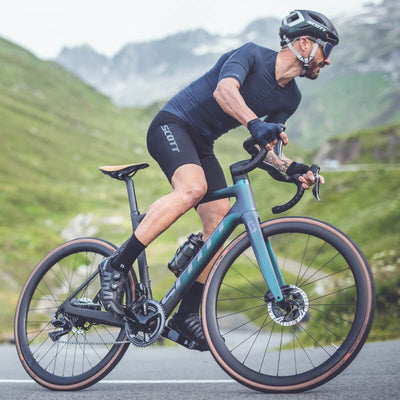
ROAD ELECTRIC BIKES
Road E-Bikes +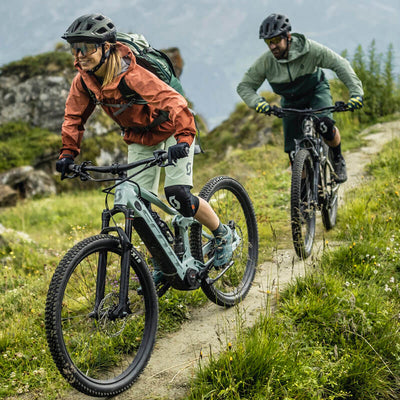
MTB FULL SUSPENSION
MTB Full Suspension +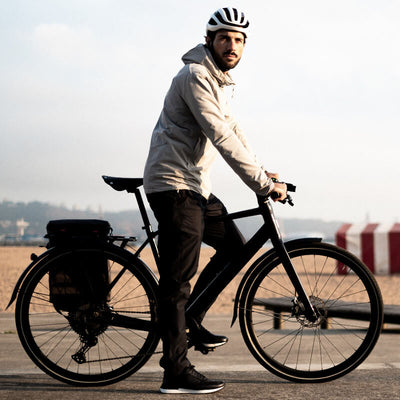
TREKKING, TOWN & HYBRID
Hybrid & Town E-Bikes +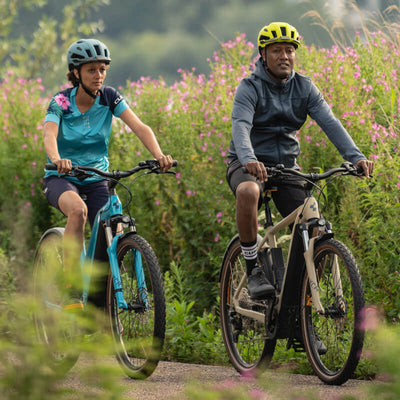
HARD TAIL MOUNTAIN BIKE
Hard Tail E-Bikes +
FOLDING ELECTRIC BIKES
Folding E-Bikes +